


Australian hockey's real Captain America: umpire Steve Rogers blows his final whistle
Captain America's real name is Steve Rogers. But Marvel doesn't have the only one. Australian hockey has its own Steve Rogers, one of the finest umpires the country has produced, and more than three decades after he first picked up a whistle as a 12-year-old in Ipswich, he has umpired his last international match.
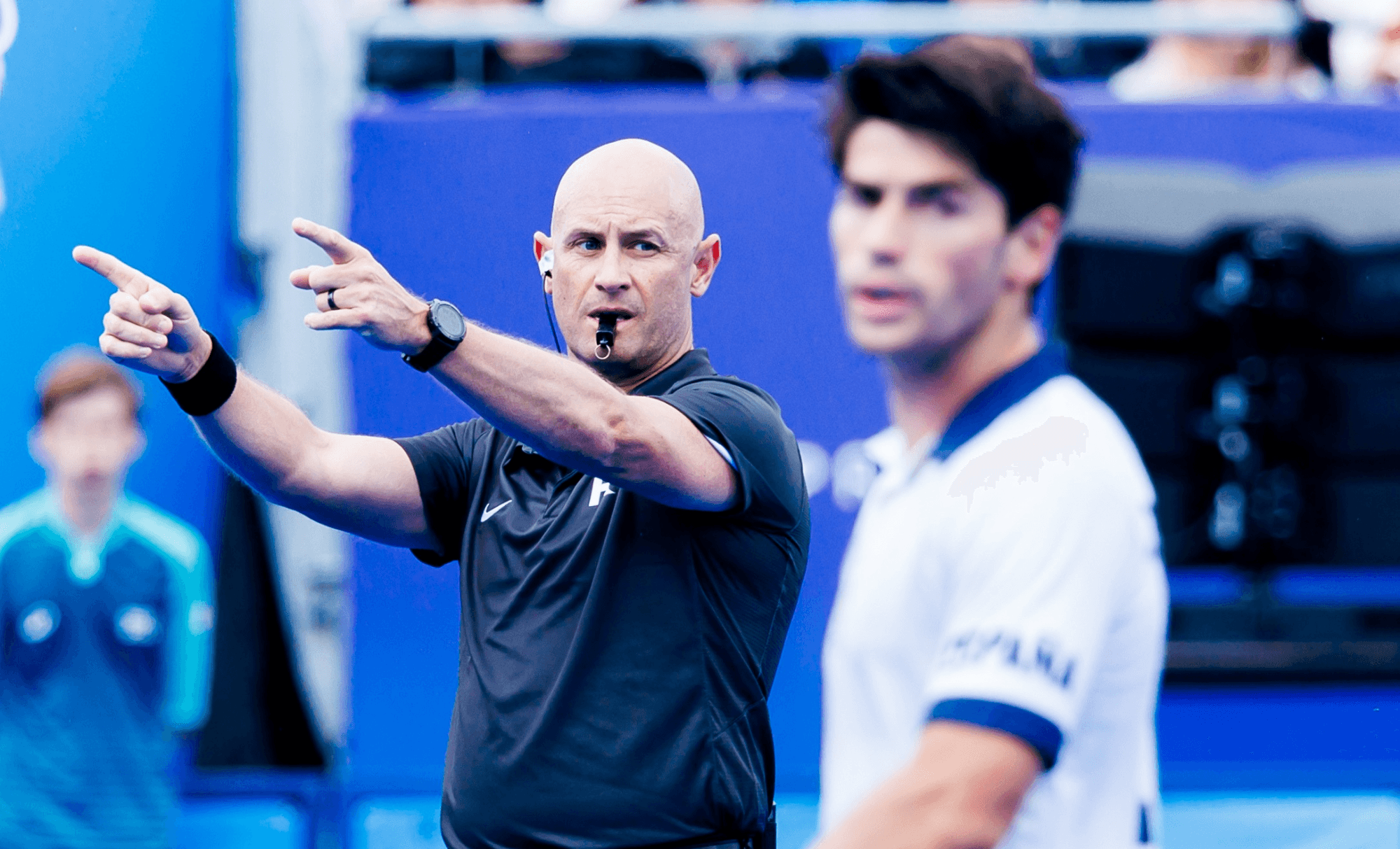
Captain America's real name is Steve Rogers. But Marvel doesn't have the only one. Australian hockey has its own Steve Rogers, one of the finest umpires the country has produced, and more than three decades after he first picked up a whistle as a 12-year-old in Ipswich, he has umpired his last international match. He bowed out at the World Cup in the Netherlands with his 100th international, the Golden Whistle, and a career that took him to a World Cup final, an Olympic gold medal match and recognition as the best umpire in the world.
As a kid, Steve Rogers would sit in his bedroom blowing a whistle, pretending he was officiating a World Cup final.
He went on to umpire a real one. A year later he was in the middle of an Olympic gold medal match. And at this year's World Cup in the Netherlands, he walked off an international pitch for the last time with 100 matches to his name.
"It's a strange feeling, to be honest," Rogers said. "Hockey has been such a huge part of my life for more than three decades, so knowing that I've blown my last international and national whistle is something that will take a little while to sink in.
"There is a lot of emotion, but I am proud of what I have achieved."

Rogers received the Golden Whistle at his final tournament, the FIH's recognition for umpires who officiate 100 international matches. It was a mark he had always aimed for.
"It wasn't that long ago I was thinking I would never get to that mark," he said. "So to reach that milestone at my final World Cup was pretty special.
"For me, 100 matches isn't just a number. It represents a lot of years of hard work, sacrifice, plenty of setbacks and limited opportunities."
His wife and stepdaughter made the trip to the Netherlands to see it.
"To receive the Golden Whistle at the World Cup and have my family there to share it with me was something really special."
Rogers' path to the top was not a straight line. He travelled to the 2023 Men's World Cup in India as a reserve umpire and only made his World Cup debut when a colleague fell ill. By the end of the tournament he had been appointed to the final, where Germany beat Belgium in a shootout.
Twelve months later he was on the pitch for the men's gold medal match at the Paris 2024 Olympic Games, where the Netherlands beat Germany, again in a shootout. In November 2024 he was named FIH Umpire of the Year, the first Australian to receive the award since it was introduced in 2015.
For Rogers, the appointments mattered as much as the matches themselves.
"To be selected for the World Cup Final in 2023 and an Olympic gold medal match in 2024 means that the umpire managers and my peers trusted what I was doing on the field and believed in me when the pressure was at its highest," he said.
It was a long way from where it all began. Rogers started umpiring by chance at 12, when his older brother, himself a high-level umpire in Queensland, asked him to fill in for an official who hadn't turned up to a game in Ipswich.
His ambitions grew in the old Australian Hockey League (AHL) days, surrounded by some of the best umpires in the world: Dave Gentles, Murray Grime, Tim Pullman and Adam Kearns.
"These were people I looked up to," he said. "Just sitting around listening to them talk about the tournaments they had been to and the experiences they had was pretty special. As a young umpire, I remember thinking how incredible it would be to follow in their footsteps one day."
Gentles and Grime both earned the Golden Whistle themselves. Rogers now joins them.
"Looking back now, it is hard to believe where the journey has taken me," he said. "It's something I never could have imagined as that 12-year-old kid with a whistle."
He is clear about what got him there.
"The hardest part was waiting for my time. Luckily, I stuck around, worked hard, particularly on my fitness and game management, and kept learning. When my opportunities came, I was ready for them."
Not every Steve Rogers needs a shield. This one needed patience.
An international umpiring career means weeks away from home, often for years at a time. Rogers' first thanks go to his family: Bijanca, Elijah, Abigail, Hudson and Phoebe.
"They have been the foundation that has made everything possible," he said. "Throughout the years, they have sacrificed so much and stood by me through the travel, training, setbacks, and countless days and weeks away from home. They have endured missed birthdays, family illnesses, and many important moments that I was unable to share with them.
"Their love, patience, understanding and unwavering support have carried me through every challenge and every success."
He also credits the mentors, umpire managers and fellow umpires he worked alongside, singling out John Corney, Basil Coker and Michael Weimers, who backed him from his junior days right through to his final tournament.
"I've learned something from almost everyone I've worked with," he said. "To everyone who has supported me, challenged me, backed me and gave me constructive criticism when I needed it: it all helped me become the umpire that I was."
With the international whistle put away, Rogers is looking forward to time he hasn't had for a long while.
"Now it's time to enjoy the next chapter, with more family time, some baseball and some golf."
He once said an umpire is only as good as their last game. Hockey's Steve Rogers umpired his last on the biggest stage, with no shield and no superpowers. Just a whistle, a lot of patience, and a generation of Australian umpires who have watched him show what's possible.
Hockey Australia congratulates Steve on an outstanding career and thanks him for everything he has given the game.