




Barry Dancer inducted into the Sport Australia Hall of Fame 2026
"My second family": Barry Dancer's road from Montreal heartbreak to the Sport Australia Hall of Fame

Tonight in Melbourne, the coach who ended the Kookaburras' 48-year wait for Olympic gold joins the royalty of Australian sport. He says the honour belongs to hockey as much as to him.
In 1976, Barry Dancer was part of the Australian squad beaten 1-0 by New Zealand in the Olympic final. Twenty-eight years later, he stood on the sideline in Athens as the Kookaburras finally won the gold his generation never could.
Tonight, Dancer will be inducted into the Sport Australia Hall of Fame as a General Member. He is the only coach in the 2026 class.
"It's great to be personally recognised and join the royalty of Australian sport," Dancer said. "But I also appreciate what it means for sport."
A second family
For the Ipswich-born Queenslander, it started where it starts for most hockey people: at a local club.
He grew up about 50 metres from the local hockey field in Ipswich and joined Hancock's Hockey Club as a youngster, training on grass under a single floodlight.
"It's been a big part of my life and our family's life," he said. "Growing up, being introduced to hockey, it became a passion. The club and the local association became a second family. I spent a lot of time at those grounds with those people.
"As my journey in hockey went to other places, that second family expanded. I'm very comfortable and very thankful for having it."
The final that got away
Dancer played 48 times for Australia between 1973 and 1979. At the Montreal Olympics, Australia went into the final as favourites. New Zealand won 1-0 with a penalty corner goal early in the second half.
"Disappointment was probably the key word," he said. "Such a great opportunity was missed to win the gold medal on that day. Credit to a good New Zealand team that played to their potential, and probably we didn't."
It was another chapter in what became known as the Kookaburra curse. Since its Olympic debut in Melbourne in 1956, the men's team had won three silver and three bronze medals, but never gold.
Dancer believes those near misses weren't wasted. "Some of the lessons out of that campaign, and others, have helped the team develop over the decades since," he said. "They put us in a good position, on the shoulders of other people's experience, to be successful come 2004."
He carried Montreal into his own coaching. "There were lessons for me to take from that, that I was conscious of as I took over the reins," he said. "It was a reminder of things we needed to do, but also some of the things we didn't need to do."
One clear goal
After coaching England's men from 1997 to 1999 and Great Britain at the Sydney 2000 Olympics, Dancer took over the Kookaburras in 2001. Colin Batch, who would later coach the team himself, was his assistant for all eight years.
There was no ambiguity about the job.
"There was one clear goal, and that was to win Olympic gold in 2004," he said. "That was where our focus was. A lot of our planning, preparation and decisions were around that particular goal."
His players bought in. Jamie Dwyer has since described Dancer as the father figure a young, hungry team needed and credited the culture he set with winning Olympic gold.
Athens
In Athens, the Kookaburras met the Netherlands, the two-time defending champions, in their final pool match. Both teams had already qualified for the semi-finals, and the Dutch won. Where others saw a loss, Dancer saw a team ready.
"I believe we outplayed the Dutch overall without getting a result," he said. "The performance of our team in that match gave me even greater confidence that the team could be successful when it came to the crunch."
His message to the players was to trust the process. "We're in a great position. We're well prepared. Focus on how we went about playing in that match, and replicate that under the pressure of Olympic semi-finals and finals."
Australia beat Spain 6-3 in the semi-final, setting up a rematch with the Dutch on 27 August 2004.
Ronald Brouwer put the Netherlands ahead in the first half. Travis Brooks levelled three minutes after the break. At 1-1, the final went to golden goal extra time.
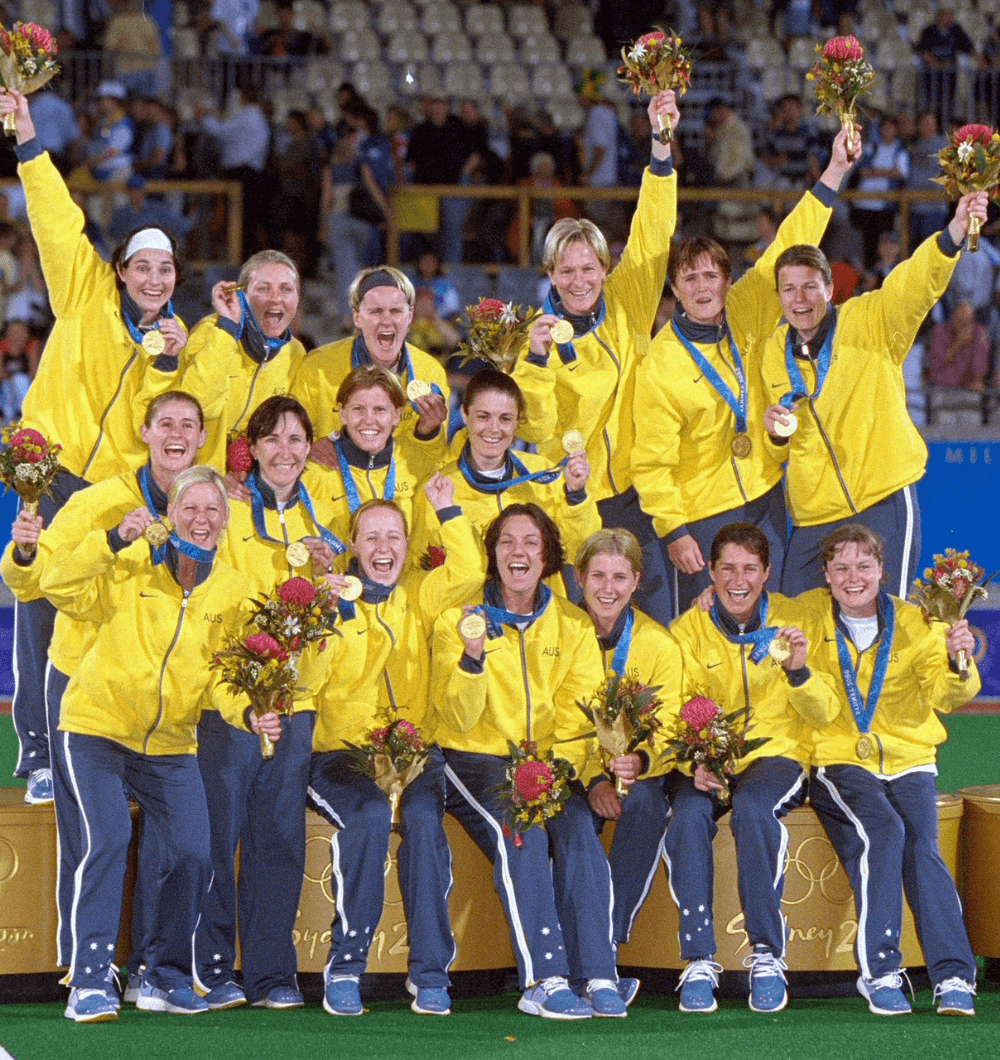
In the eighth minute, Australia won a penalty corner. The first shot was fumbled, and Jamie Dwyer was there to finish it. After 48 years, the Kookaburras were Olympic champions.
Dancer has said the golden goal was a special moment for everyone in the campaign and for Australian hockey more broadly. What followed, he told Poligras in 2025, was "a mixture of exhilaration, relief and deep satisfaction": hours of celebration in the dressing room, phone calls from home, and former greats joining the players on the pitch to share the joy.
Eight years at the top
Dancer coached the Kookaburras in 251 matches through to 2008, with a 64 per cent winning record, and was named Sport Australia Coach of the Year. Under him, the team won:
- Olympic gold, Athens 2004
- Olympic bronze, Beijing 2008
- Commonwealth Games gold, 2002 and 2006
- Champions Trophy gold, 2005 and 2008
- World Cup silver, 2002 and 2006
He also ran the Australian Institute of Sport men's program over the same period, and is a member of the Hockey Australia Hall of Fame and the Queensland Sport Hall of Fame.
More than a medal
Dancer joins hockey greats in the Hall including Ric Charlesworth, his teammate in Montreal, Rechelle Hawkes, Alyson Annan and his own Athens match-winner, Jamie Dwyer. He has called it the greatest honour of his sporting career.
"I'm very thankful for the recognition, and excited that my family can share in that at the induction gala," he said. "Whilst it's recognition for me, it's also further recognition for our sport, arguably the best performed team sport for Australia at Olympic Games."
He sees it as a win for coaches at every level, not just the elite. "It's recognition for their role on a week-to-week basis with clubs around the country, and the role they play for broader Australian society."
And he was quick to share the credit for Athens. "Whilst the coach has a central role to play, there's a lot of other people around the players," he said. "A lot of people contributed to not just the Olympic success in Athens, but various Olympic teams over the years."
The next generation
Dancer has seen the game change remarkably across five decades, from Montreal, the first Olympics played on synthetic turf, to the game today.
"The innovation that's happened in our sport is probably greater than most other sports over those decades," he said.
He counts Hockey One as part of that story. "It's just another step in that evolution," he said. "It's important for player development towards our international success, as well as identifying the next group coming through."
That next group will carry the hope he once carried. The Kookaburras have not won Olympic gold since Athens, and Dancer likes what he sees in a young squad that has turned over since Paris.
"I see a team currently that is on the rise," he said. "I think they're well positioned heading towards Los Angeles. From afar, I would observe a very strong team ethic and a very strong work ethic, and I suspect that just mirrors what they're doing in their preparation."
Fifty years on from Montreal, he still takes great joy in watching it.
"The players themselves perform under the greatest pressure," he said. "It's a pleasure to watch that and see that in the Kookaburras and the Hockeyroos as we go forward."